INFORMATION PAGES

SOUTH AFRICA'S MOST COMPREHENSIVE HOTEL GUIDE - AT YOUR SERVICE

WESTERN CAPE
Cape Town Hotels
Cape Winelands Hotels
Whale Route Hotels
Garden Route Hotels
EASTERN CAPE
East London Hotels
Port Elizabeth Hotels
St Francis Bay Hotels
GAUTENG
Johannesburg Airport
Johannesburg Hotels
Pretoria Hotels
KWAZULU-NATAL
Durban Hotels
Drakensberg Hotels
South Coast Hotels
North Coast Hotels
MPUMALANGA
Kruger Park Hotels & Lodges
NORTH WEST
Sun City Hotels
LIMPOPO
NORTHERN CAPE
FREE STATE
FIVE STAR HOTELS
FOUR STAR HOTELS
THREE STAR HOTELS
SPA HOTELS
HOTEL GROUPS
Sun International
Southern Sun
Three Cities
Legacy Hotel
Relais & Châteaux Hotels
Mantis Collection
The Collection by Liz McGrath
SWAZILAND
NAMIBIA
BOTSWANA
ZAMBIA
SOUTH AFRICA
WEDDING GUIDE
indian ocean hotels

golf in south africa

honeymoons in south africa

south african lodges

south african car hire

property in south africa

  You are here : Home / Info on Table Mountain

Table Mountain

Cape Town – Table Mountain

Table Mountain Website
Table Mountain Cableway Enquiries: Tel: (021) 424-8181 or Online Enquiries

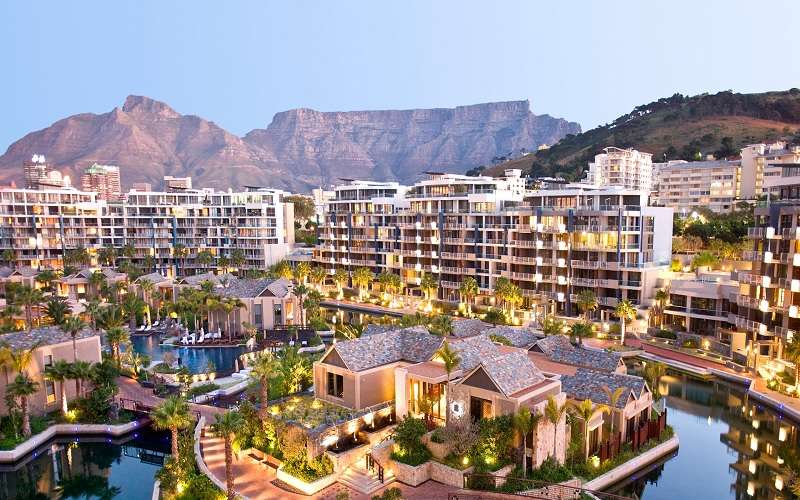
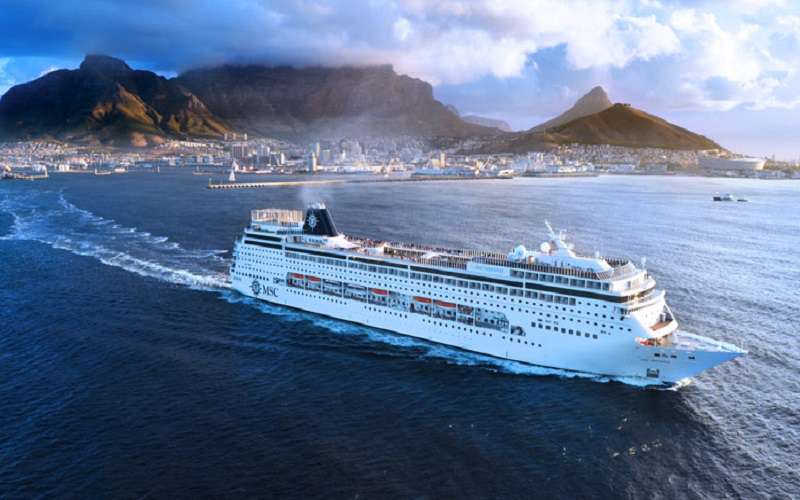
Providing a majestic backdrop to the city of Cape Town, Table Mountain is one of the world's most striking natural wonders and South Africa's most recognized icon. Flanked by Devil's Peak to the east, Lion's Head and Signal Hill to the west, the massif of Table Mountain comprises the flat-topped plateau of the eastern and western tables overlooking the city of Cape Town, the eastern buttresses with their forested ravines flanking the city's southern suburbs, and the western buttresses of the Twelve Apostles standing sentinel along the Atlantic coast.

The level summit of Table Mountain is three kilometres long, east to west. Its highest point, at 1 086 metres, is Maclear's beacon. This beacon was erected in 1843 by the astronomer, Sir Thomas Maclear, as part of an experiment to more accurately measure the circumference of the earth. The western end of the narrow plateau supports the upper cableway station, first built in 1929.

In May 1998, the proclamation of the Cape Peninsula National Park placed Table Mountain and much of the remaining unspoiled area of the Peninsula under the custodianship of South African National Parks. The Cape Peninsula National Park is the only national park in the country set in the midst of a bustling metropolis.

Please
 • Be vigilant.
 • Take only photographs, leave only footprints
 • Stick to designated paths, roads and trails
 • Note closing times
 • Keep pets on a leash
 • Consider the privacy of fellow visitors
 • Adhere to road safety rules
 • Choose your mountain route according to the fitness and experience of the party
 • Tell someone exactly where you are going, and when you expect to return
 • Stay put in case of trouble - don't try to find your way down in mist or in the dark.
 • Retrace your steps if you get lost.

Please don't

 • Litter
 • Light any fires without permission
 • Feed, disturb or injure any animal
 • Damage, remove or destroy any seeds, plants or rocks
 • Climb alone or visit secluded areas after dark
 • Leave personal belongings unattended
 • Stray off constructed footpaths
 • Mountain bike in sensitive areas

Landscape of Table Mountain
There is much of geological interest on and around Table Mountain, displaying evidence of the varying rock types from which the mountain is composed, and the geological processes and changing climatic conditions which, over hundreds of millions of years, have served to build and sculpt the landscape we see today. The bulk of Table Mountain is composed of layer upon layer of erosion resistant light grey sandstone of the Peninsula formation (so-called Table Mountain sandstone) and shale and siltstone of the underlying Graafwater formation. These rest upon a foundation of what is, for the most part, Cape granite. In the north the Cape granite gives way to rocks of the Malmesbury group, from which most of Signal Hill is made up, and which run under the city centre and Devil's Peak to the west.

Table Mountain sandstone erodes slowly and produces sandy, nutrient-poor soils that are easily leached. The indigenous fynbos ("fine bush") vegetation is well adapted to such conditions and reaches its greatest species diversity in places where these poor soils are found. Soils derived from Cape granite and rocks of the Malmesbury group, on the contrary, are much richer in nutrients and more susceptible to erosion.

Water on Table Mountain
Van Riebeeck's decision as to where to establish the first European settlement was influenced by the continuous flow of fresh water from the Platteklip Gorge stream, which provided the first supply of water for Cape Town. Until the second half of the nineteenth century the city was able to meet its water needs from the Platteklip stream and from other springs and streams on the north face of Table Mountain.

The discovery of diamonds in Griqualand West in 1867 and of gold on the Witwatersrand in 1886, however, provided the stimulus by which the population of Cape Town trebled from 33 000 in 1875 to over 100 000 by the turn of the nineteenth century. Cape Town became not only South Africa's leading port of entry but also the main service and supply centre for the rapidly
developing hinterland. To address the growing demand for water, work began in 1887 on a plan to cut a tunnel through the Twelve Apostles to bring water from the untapped Disa Stream to the Camps Bay side of the mountain. From here it was fed by gravity through a pipeline to Kloof Nek, and then down to Cape Town. During the late 1800s and early 1900s five storage dams were built on the mountain to augment the supply of water to both Cape Town and the suburbs developing along the eastern and western slopes of the mountain.


Fauna on Table Mountain, Cape Town
The fauna of this area includes a wealth of invertebrate species that may exceed even the flora in their diversity, and which over time have evolved an astonishing array of symbiotic interrelationships with the flora that scientists are only now beginning to understand. No less than 111 of these invertebrates, and one vertebrate - the Table Mountain Ghost frog - are found nowhere else on earth. The visitor to Table Mountain is most likely to encounter the ubiquitous dassie (Rock Hyrax), whose closest living relative is, strangely enough, the African elephant.
While early callers at the Cape commented on the abundance of large animals they encountered here, most of these were shot out or driven away in the early years of European settlement. However, while the larger predators like lion, leopard and hyena have
disappeared, most of the animals found here historically still survive. This is all the more remarkable when one considers that Cape Town has experienced over 350 years of urban, agricultural and industrial development, with attendant pressures on the remaining natural environment.

HUMAN HISTORY
It may never be precisely known when the first people arrived at the Peninsula, but it may have been as early as a million years ago. When the first Khoi-khoi pastoralists arrived with their domestic animals around 2000 years ago, they recognised the natural assets of the area. By the time the first Europeans began calling at the Cape these pastoralists were driving their herds of sheep and cattle here each summer for the good grazing and certain water supply. To these people, Table Mountain was known as Hoerikwaggo ("the mountain of the sea").

SOME MAIN ATTRACTIONS
 • Kirstenbosch National Botanical Garden (managed by the National Botanical Institute)
 • Table Mountain Aerial Cableway
 • Signal Hill
 • Rhodes' Memorial
 • Lion's Head

WALKS AND CLIMBS on Table Mountain
Climbers have opened over 350 separate routes to the summit of Table Mountain, ranging from easy to very difficult.

Climbing the mountain should not be attempted without expert advice. The Mountain Club of
South Africa welcomes dedicated mountaineers as prospective members. Walks are organized by volunteer groups known as the Friends of Lion’s Head and the Friends of Newlands Forest.
The most popular trails are the Pipe Track from Kloofnek; Platteklip Gorge; Skeleton Gorge; Constantia Nek towards the dams and Maclear's Beacon; and Kasteel Poort on the Camps Bay side.
For more information consult the map "Approved footpaths of Table Mountain", available in local bookstores, or a number of hiking guidebooks that are available.

* Approximate Walking Times (add time for stops)

Constantia Nek to Maclear’s Beacon 1085m 4 Hours*
Skeleton Ravine to Maclear’s Beacon 1085m 3.5 Hours*
Platteklip Gorge to Maclear‘s Beacon 1085m 2.5 Hours*
Kasteel’s Poort to Maclear’s Beacon 1085m 3.5 Hours*
Lion’s Head 669m 2 Hours*

• Abseiling (Western Table)
 • Angling and diving (Oudekraal and the Karbonkelberg)
 • Braaiing (barbequeing) and/or picnicking - (Oudekraal, the Glen, Van Riebeeck Park, kirstenbosch, Signal Hill)
 • Hang-gliding and parasailing (the Karbonkelberg and Lion's Head)
 • Hiking (trails traverse the entire area)
 • Mountain climbing and rock climbing (Lion's Head and Table Mountain)
 • Scenic drives (Tafelberg Road, Signal Hill Road, Victoria Road)
 • Mountain biking (below Tafelberg Road)
 • Dining (restaurants at Kirstenbosch, Rhodes Memorial and the upper cableway station on Table Mountain)


FLORA
The Cape Floristic Region is internationally recognized for its extraordinary floral biodiversity. Table Mountain and the Peninsula are home to some 2 285 plants species - more than 25% of the species found throughout the Cape Floristic Region. Table Mountain alone has over 1 500 species of plants, more than the whole of the United Kingdom, many of which are endemic. The most common regetation type on Table Mountain, as with the rest of the Cape Peninsula National Park, is fynbos.

This generally low-growing, shrubby vegetation includes heaths (Ericaceae), reeds (Restionaceae) and proteas (Proteaceae). Some of the most conspicuous fynbos species on the mountain are from the protea family, and include the King Protea Protea cynaroides, South Africa's national emblem. Also found are the larger-growing "Waboom" Protea nitida and the "Kreupelhout" Leucospermum conocarpodendron which can grow to the size of a small tree. Another member of the protea family is the endemic Silver Tree Leucadendron argenteum, which is found on the slopes of Lion's Head and above Kirstenbosch.It is in the shrubs found below these larger species, however, that one finds more striking evidence of the extraordinary species diversity for which fynbos is famous. This is particularly so with the geophytes (plants that grow from underground bulbs), such as members of the Disa, Gladiolus, Moraea, Watsonia, Babiana and Iris genera. Many geophytes are well known for their spectacular displays when flowering en masse, particularly in the wake of fire. The second vegetation type of Table Mountain, Renosterbos ("rhinoceros bush"), is also rich in geophytes. Found on Signal Hill and the lower slopes of Devil's Peak, Renosterbos takes its name from the drab, grey ericoid shrub Elytropappus rhinocerotis that is generally abundant. Alsocharacteristic of Renosterbos is the presence of grasses, which in this veld type take the place of restios, and the virtual absence of proteas. Lastly there is afro-montane forest and thicket. This covers only around 3% of the Cape Peninsula, and is mainly established along the cooler, well-watered ravines on the eastern slopes of Table Mountain, and in Orange Kloof. Together these vegetation types constitute a flora so rich in species that it is not only the most diverse corner of the Cape Floristic Region, but also, from a botanical point of view, the richest area, for its size, anywhere on the planet, surpassing even the tropical rainforests in its diversity. This is the reason that the Cape Peninsula has been nominated for World Heritage Site status.

DID YOU KNOW?
The Sacred Circle - The pioneers of Islam in the Cape were political prisoners and slaves brought from the East during the seventeenth and eighteenth centuries. Most had been exiled for leading their nations' resistance to colonialism. In 1694, for example, Sheikh Joseph was banished to the Cape by the Dutch after the conquest of Java and Sumatra. Because of the lives and works of these religious leaders, and the sitting of their kramats (tombs), Muslims have come to regard Cape Town as a holy place. Sheik Joseph's resting place is one of a number of kramats that form a sacred circle around the city. The road between Lion's Head and Signal Hill runs past the domed kramat of Mohamed Gasan Gaibie Shah, while the kramats of Sayed Abdul Haq and ten others are found in the Deer Park, a common place of refuge for Muslims during colonial times. Anotherkramat is that of Sayed Abdul Malik, a doctor and spiritualist who came to the Cape at the end of the eighteenth century as a slave from Batavia.

Cannons - In former years, a small cannon was fired from the summit of Lion's Head, signaling the approach of ships in Table Bay. This was relayed to the interior by cannons mounted at other vantage points, summoning distant farmers to the city with provisions for trade, or to defend the harbor against attack.

Noonday Gun - The South African Navy fires Signal Hill's Noonday Gun at 12a.m. every day but Sunday. The famous Lion's Battery on the slopes of this 335m hill overlooking Table Bay is also used to fire salutes for visiting ships and on ceremonial occasions.

A Missing Link - The Wynberg caves are the only place on earth where the missing link between worms and insects occurs. The velvet worm peripatus is regarded as the evolutionary link between segmented worms like earthworms and arthropods, such as millipedes.

The Tablecloth - Devil's Peak got its name from a legend concerning a Dutch pirate named Van Hunks, who is said to have spent his days smoking his pipe where the saddle of land connects Devil's Peak to Table Mountain. One day, he challenged the Devil to a smoking contest, with the condition that if he won he could reclaim his previously forfeited soul. So much smoke was generated by the contest that the "tablecloth" formed over the mountain.

The Guardian of the South - From various myths and legends, the Portuguese poet, Luis Vas de Camoes, (1524-1580), developed the character "Adamastor" - the monstrous Guardian of the South who was said to have been vanquished by the Portuguese explorers after they had rounded the Cape of Good Hope. The Peninsula was portrayed as the supine form of Adamastor after his death. In Xhosa legend, Djobela - the Earth Goddess turned mighty giants, placed in the four corners of the earth, into mountains to guard the world. The greatest giant of them all – Umlindi Welingizunu was Table Mountain, the Watcher of the South.

Constellation - Table Mountain is the only geographical feature in the world that has a constellation named after it - the Mensa ("table" in Latin).


Tourist Information
South Africa Hotels  |  Western Cape Hotels  |  Ambassador Hotel  |  Gauteng Hotels  |  Kwazulu-Natal Hotels
Michelangelo  |  Cascades Hotel  |  Cape Town Hotels  |  Port Elizabeth Hotels  |  Durban Hotels
Johannesburg Hotels  |  Kruger Park Hotels  |  Radisson Hotel Waterfront  |  Park Hyatt Johannesburg
Arabella Sheraton  |  Sheraton Pretoria  |  Cape Grace Hotel  |  Kruger Park Lodge  |  Directory
 - Bookmark - Tell a Friend
Navigate Below