Madagascar Hotels(1)
- View By:
- Hotels
- Sort By:
- Province
- Most Recent
- A - Z
- Star Rating
- Map
- Tours
- Activities
- Specials
- Area Info
View by Province
Location: Nosy Iranja Island, Antsiranana Province, Madagascar Island, Madagascar
No. of Rooms: 29
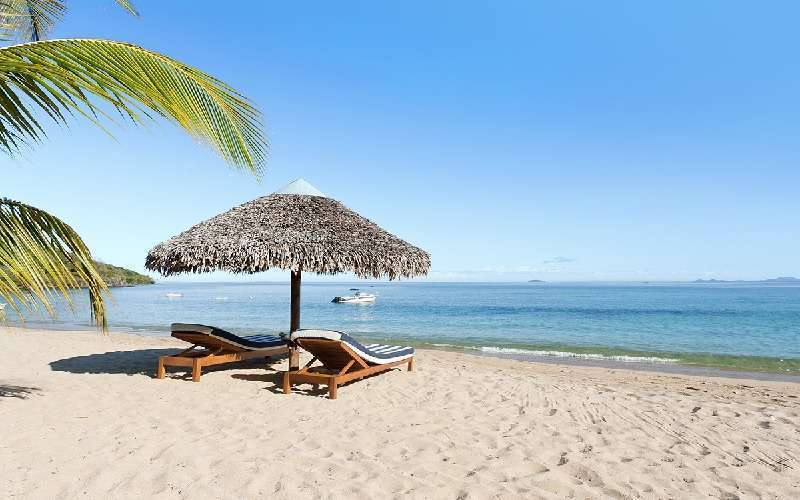
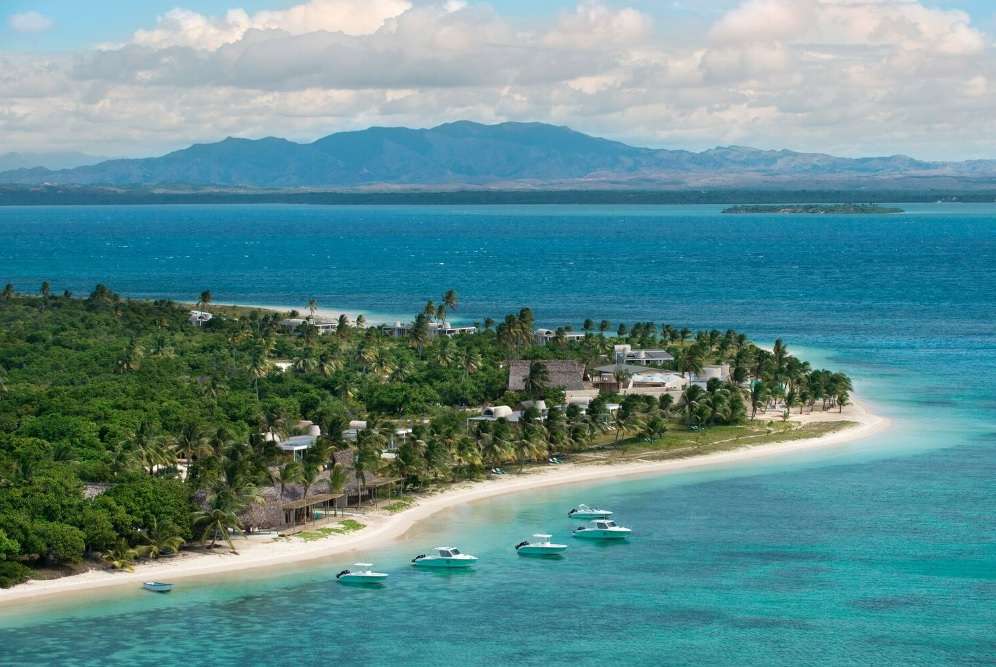
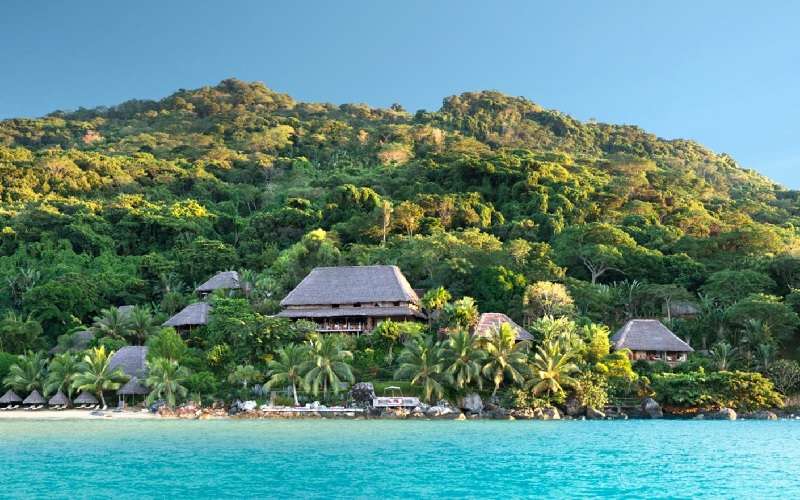
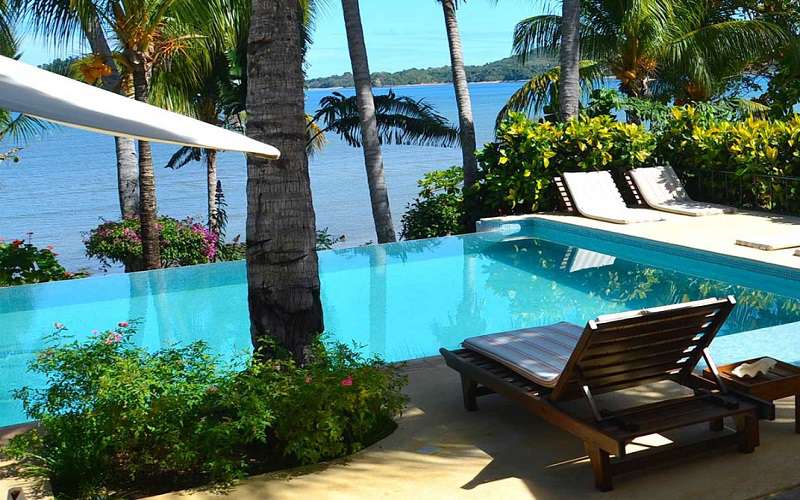
Located on Madagascar's premier resort island Nosy Be off the north west coast, translated 'perfumed island' due to its abundance of Ylang Ylang blossom scent, one can find the luxurious Nosy Iranja B...
Guest Reviews: 0 Reviews
€230.00
Distance from Airport : 2 km
Distance from City Centre : 2 km
Address: Nosy Iranja Island, near Nosy Bay, Madagascar, Indian Ocean Island, Southern Africa
Location: Google Map
Madagascar Information
Overview
Quick Facts: Madagascar
- Land Area: 587,040 km²
- Madagascar is the 4th largest island in the world comparable to the size of Kenya
- Population: 17,404,000 (2003) with 0,15 % foreign residents and 30 % living in urban areas
- Capital: Antananarivo with about 1,432,000 inhabitants
- Other cities in Madagascar: Fianarantsoa, Antsiranana (Diégo-Suarez), Toamasina, Antsirabe and Mahajanga (Majunga)
- Life Expectancy: 60 years for males, 64 years for females
- Population growth: 2,84 %
- Time: Sunrise is in Madagascar at 6:30 am in winter and at 5:30 am in summer. In winter the sun sets at 17:30 pm and in summer at 18:30 pm. The time difference is during summer only +1 hour and in winter +2 hours (one hour more for UK).
- Electricity: Electrical current is 220 volts AC, 50Hz. Plugs are generally two-pin. Power blackouts are usual so take a torch with you. In rural areas there is still no electricity, so that most hotels operate an own generator, which runs normaly in the late afternoon and in the early morning.
- Weights & measures: Metric
- Currency: Ariary (Ar)
Introducing Madagascar
The Republic of Madagascar is an island nation located in the Indian Ocean off the southeastern coast of the African continent. The main island, which is also called Madagascar, is the fourth-largest island in the world.
Archaeologists state that Madagascar was first inhabited sometime 300BC - 500AD, by Austronesian peoples who arrived on outrigger canoes. Since, there have been many Bantu and Arab influences and population intermixture. Madagascar was ruled by the local Merina kingdom in the 19th century and was part of the French colonial empire from 1890 to 1960, when the current Republic of Madagascar became independent.
The local language spoken in Madagascar by the majority of the population Malagasy is an Austronesian language and one of the official languages. The other official languages are French, official since independence, and English, official since 2007. Malagasy is the official language spoken in Madagascar, but French is used in business and government and is widely spoken in the main cities. A few people involved in the tourism industry might be able to speak some English, but it is not widely spoken.
The main religions are Malagasy mythology and Christianity but there also minorities of other religions, most significantly Islam. About 45% of the Malagasy are Christian, divided almost evenly between Catholics and Protestants. 7-10% of the population are Islamic. The rest of the country's population practices traditional religions.
Madagascar is home to 5% of the world's plant and animal species, of which more than 80% are endemic to Madagascar. They include the lemur infraorder of primates, the carnivorous fossa, three bird families and six baobab species.
Geography of Madagascar
With 587,000 square kilometres, Madagascar is the world's 46th-largest country and the fourth-largest island. Madagascar is slightly larger than France.
Towards the east of Madagascar, a steep escarpment leads from the central highlands down into a ribbon of rain forest with a narrow coastal further east. The Canal des Pangalanes in Madagascar is a chain of natural and man-made lakes connected by canals that runs parallel to the east coast for some 460 km.
The descent from the central highlands toward the west is more gradual, with remnants of deciduous forest and savanna-like plains. These plains in the south and southwest are quite dry and are home to desert and baobabs. On the west coast of Madagascar are many protected harbours.
Along the crest of the ridge lie the central highlands of Madagascar which are a plateau region ranging in altitude from 747 to 1,341 meters above sea level. The central highlands are characterised by terraced, rice-growing valleys lying between barren hills. Here, the red laterite soil which covers a great region of the island has been exposed by erosion, showing clearly why Madagascar is often referred to as the "Red Island".
Madagascar’s highest peak is Maromokotro with its 2,876 metres. It is located in the Tsaratanana Massif in the far north of the country. The Ankaratra Massif is in the central area south of the capital Antananarivo of Madagascar and is home to the third highest mountain on the island, Tsiafajavona, with an altitude of 2,642 metres.
Further south is the Andringitra massif which has several peaks over 2,400 metres including the second and fourth highest peaks, Pic Imarivolanitra, more widely known as Pic Boby (2,658 metres ), and Pic Bory (2,630 metres). This massif also contains the Andringitra Reserve. On very rare occasions, this region experiences snow in winter due to its high altitude.
Climate in Madagascar
There are two seasons in Madagascar: a hot, rainy season which lasts from November to April, and a cooler, dry season from May to October. South-eastern trade winds predominate, and Madagascar occasionally experiences cyclones.
National Parks and Nature Reserves in Madagascar
- Ambatovaky Special Reserve
- Ambohijanahary Special Reserve
- Ambohitantely Special Reserve
- Amber Mountain National Park
- Analamerana Special Reserve
- Andasibe & Mantadia National Park
- Andohahela National Park
- Andranomena Special Reserve
- Andringitra National Park
- Anjanaharibe-Sud Special Reserve
- Ankarafantsika National Park
- Ankarana National Park
- Baly Bay National Park
- Bemarivo Special Reserve
- Berenty Private Reserve
- Betampona Integral Reserve
- Beza-Mahafaly Special Reserve
- Bora Special Reserve
- Cap Sainte Marie Special Reserve
- Isalo National Park
- Kalambatritra Special Reserve
- Kaleta Private Reserve
- Kasijy Special Reserve
- Kirindy Private Reserve
- Kirindy Mitea National Park
- Lokobe Integral Reserve
- Mananara Nord National Park
- Mangerivola Special Reserve
- Maningoza Special Reserve
- Manombo Special Reserve
- Manongarivo Special Reserve
- Marojejy National Park
- Marotandrano Special Reserve
- Masoala National Park
- Midongy du Sud National Park
- Nosy Mangabe Special Reserve
- Pic d'Ivohibe Special Reserve
- Ranomafana National Park
- Reniala Private Reserve
- Sahamalaza Îles Radama National Park
- Tampoketsa Special Reserve
- Tsaratanana Integral Reserve
- Tsimanampetsotsa National Park
- Tsingy de Bemaraha National Park
- Tsingy de Namoroka National Park
- Zahamena National Park
- Zombitse and Vohibasia National Park

.jpg)
.jpg)
.jpg)
.jpg)